Ferrari Luce – The Light Finally Comes On in Maranello
There is something fitting about Ferrari choosing Rome as the setting for the full reveal of its first fully electric car. In Rome — in 1947 — Franco Cortese won the very first race for Ferrari, driving a Ferrari 125 S on the circuit at the Baths of Caracalla. Exactly 79 years later, the same marque was ready to sign a new chapter: the Ferrari Luce.
For some, the question had long been settled. For others — those who live for the V8’s roar and the visceral hit of high-revving petrol — it has been something closer to a grieving process. But whichever camp you belong to, it is difficult not to be impressed by what Ferrari has actually built. The Luce is not a sensible EV with a Prancing Horse bolted to the bonnet. It is an engineering project of a different order entirely — and perhaps the clearest evidence yet that electric propulsion and genuine sports car performance are not opposites, but two expressions of the same ambition.
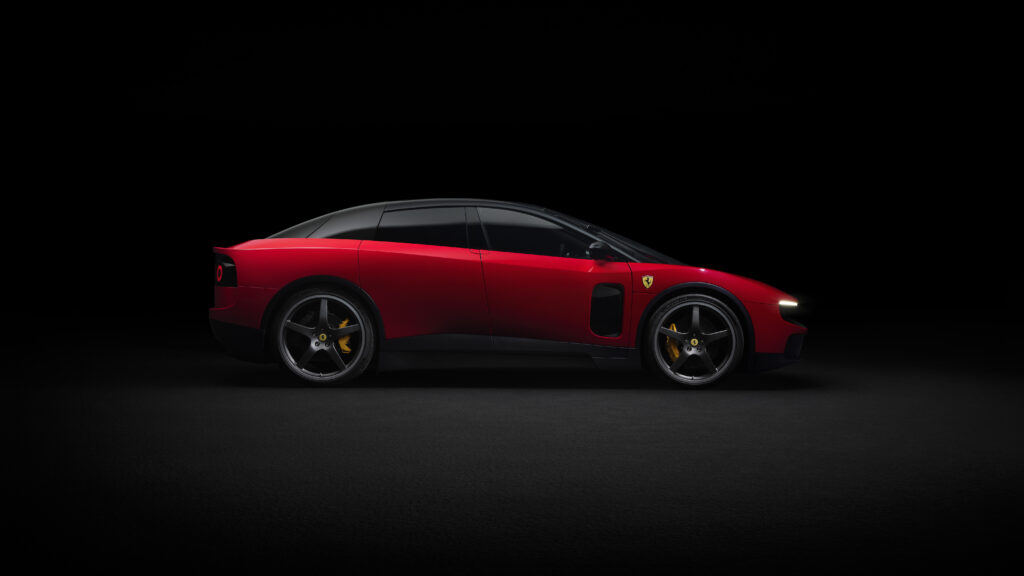
The Name Says It All
Luce means light in Italian — but it is also everyday Italian for electricity. As a brand choice, it is precise: simple, charged, and ambiguous in exactly the right way. CEO Benedetto Vigna framed it clearly when the name was revealed in February 2026: the car is meant to “illuminate the company’s future,” as Electrek reported.
That Ferrari used three separate reveal phases — technology in October 2025, name and interior in February 2026, and finally the complete car in Rome — reflects a deliberate dramaturgy. They did not simply want to show a car. They wanted to tell a story.
The Powertrain
This is where the Luce becomes technically compelling.
Ferrari developed the powertrain almost entirely in-house — not just the assembly of components, but the fundamental design of the motors, inverters, battery pack and thermal management system. Ferrari states that no strategic components are sourced from external suppliers. For a marque that has always defined itself through its own engines, this is not a coincidence — it is a statement of principle.
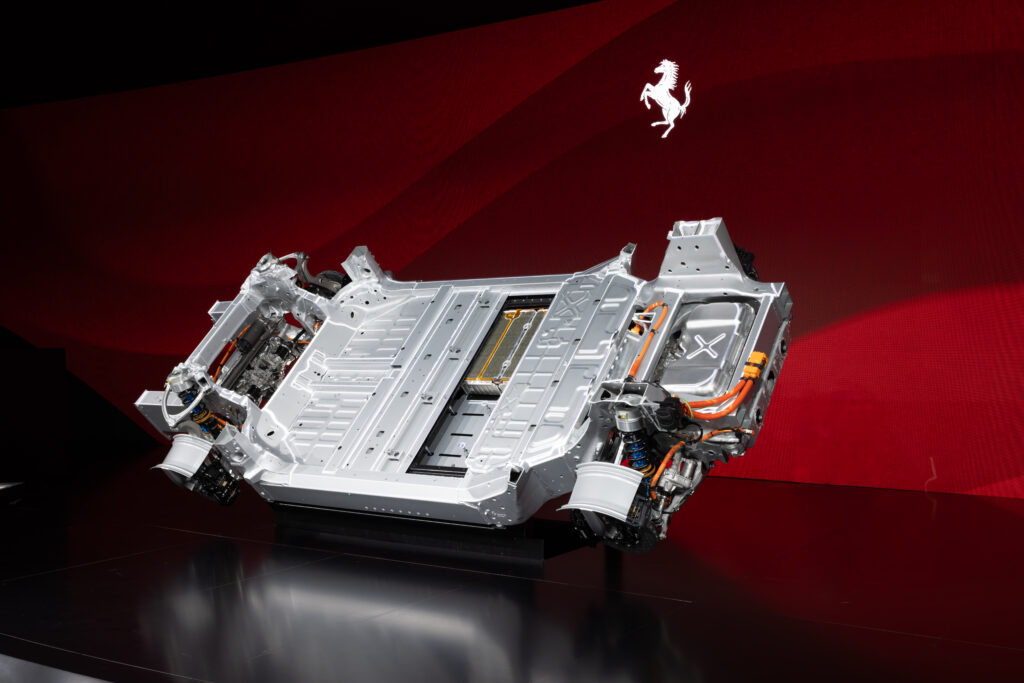
The motors use a Halbach array permanent magnet topology, drawn directly from Formula 1, in which the magnets are arranged to maximise flux density and therefore power density and torque response. There are four of them: two at the front producing a combined 210 kW, two at the rear producing a combined 620 kW. Total system output exceeds 1,000 bhp. For context, the Ferrari 488 Pista — a car motorsport enthusiasts still speak of reverently — produced 711 bhp. The Luce has nearly 400 bhp more.
Wheel torque is 3,400 Nm at the front axle and 7,750 Nm at the rear. The numbers are difficult to contextualise in a conventional road car, but they become meaningful when you understand that torque vectoring distributes power independently between each wheel in real time. Ferrari describes this as an evolution of the system from the SF90 Stradale and F80 — now with full electric precision and without a combustion engine in the loop.
The front axle can be fully decoupled during steady-state cruising to reduce range losses, and reactivated within 500 milliseconds when conditions demand it. It is an elegant answer to the tension between outright performance and real-world range.
The inverters are proprietary silicon carbide (SiC) units developed in-house. The front inverter weighs 9 kg and delivers up to 300 kW at the axle; the rear unit is more powerful, delivering up to 600 kW and weighing 15 kg. Building your own inverters is rare — it is demanding, expensive, and requires expertise across power electronics, thermal design and software. That Ferrari has done so signals an intent to own the entire performance chain.
The Battery
The battery pack has a gross capacity of 122 kWh, structurally integrated into the floor, with a centre of gravity Ferrari states is 80 mm lower than in a comparable ICE model. Weight distribution is 47–53 per cent front to rear — equivalent to a mid-engined car. The cells are supplied by SK On and use NMC chemistry, chosen for energy density and charging speed rather than maximum cycle life.
The architecture runs on 800 volts, enabling faster charging, lower current draw and reduced thermal load. Peak DC charging power is 350 kW — sufficient to recover 70 kWh in 20 minutes. WLTP range is quoted at over 530 km — respectable for a car that weighs 2,260 kg, covers 0–100 km/h in 2.5 seconds and 0–200 km/h in 6.8 seconds. Top speed is 310 km/h.
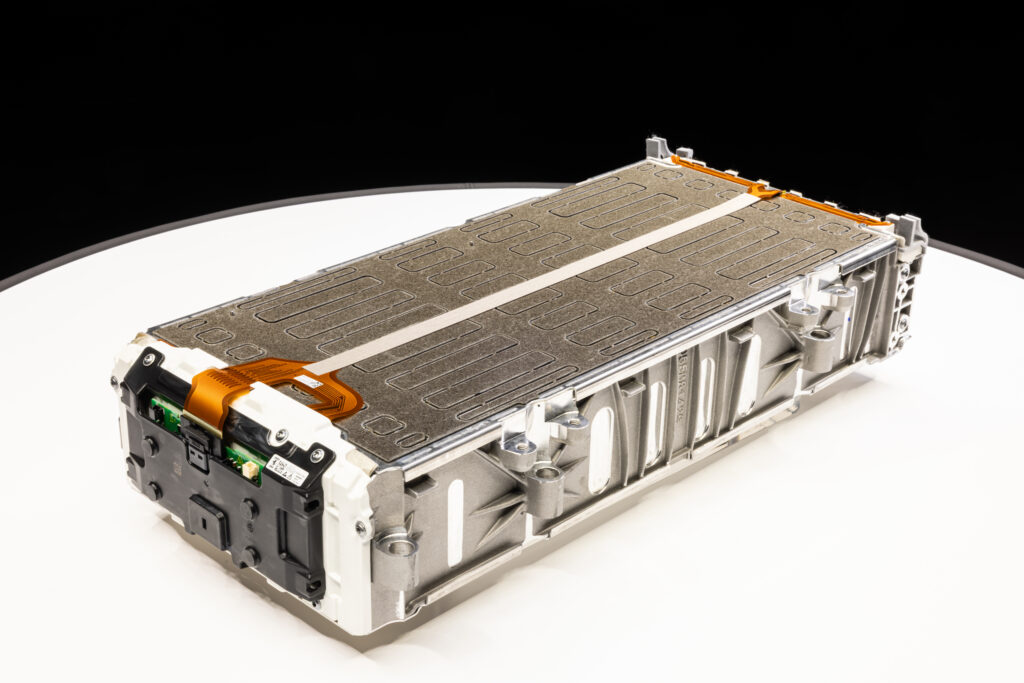
Pack-level energy density is 195 Wh/kg — the highest of any production car on the market, according to Ferrari.
Chassis and Dynamics
Ferrari employs the third generation of its 48V active suspension — a system that debuted on the Purosangue and was developed further for the F80. With individual electric torque control across all four wheels, there is no longer any need for conventional anti-roll bars. The system compensates actively for roll, pitch and yaw in real time.
Four-wheel steering is standard. The combination of active rear steering, torque vectoring and the active suspension gives Ferrari complete authority over handling balance. This is where Vigna’s positioning becomes clear: the Luce is not an “SUV with a Ferrari badge,” but a new category of driving machine.
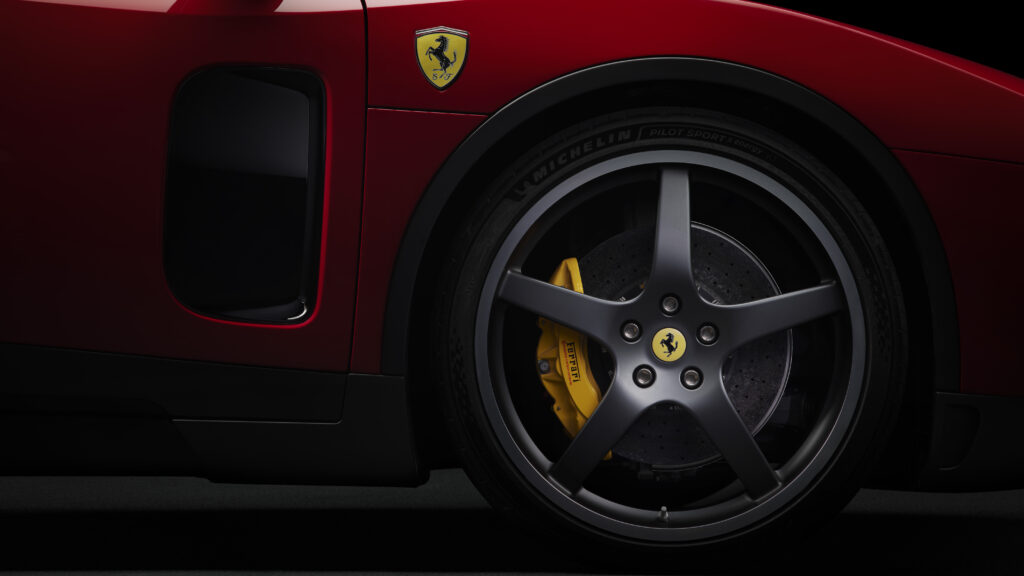
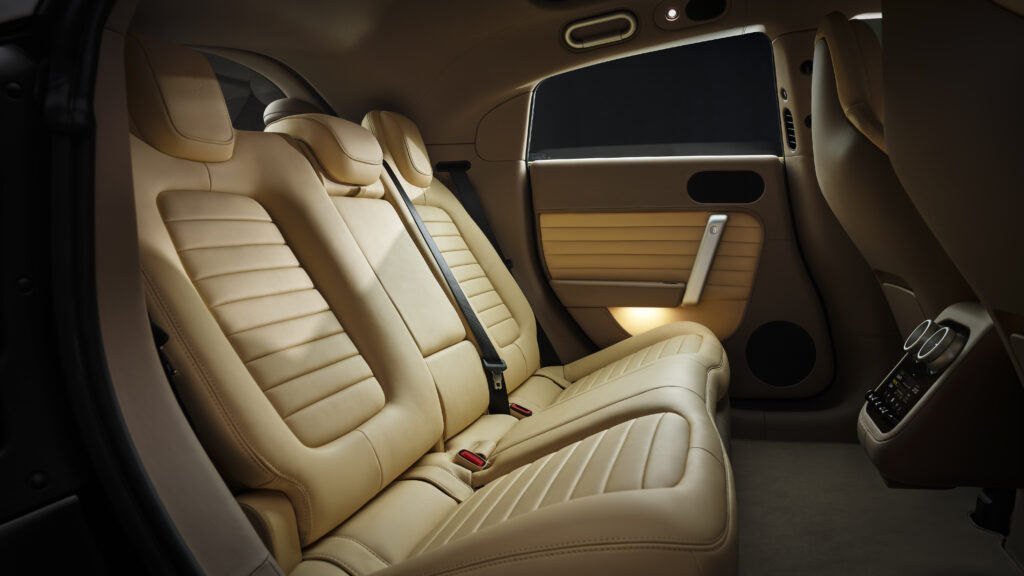
The Luce has four doors and seats five — making it the most spacious and versatile Ferrari ever built. None of that has come at the expense of performance.
Aerodynamics
The Luce achieves the lowest drag coefficient in Ferrari’s history. This was accomplished through what the company calls aero-styling convergence — a process in which aerodynamic function and exterior design were developed as a single unified brief rather than as separate workstreams. Active air shutters and an active suspension that lowers the front by 10 mm at cruising speed contribute further. The result is a car that moves through air more efficiently than anything Ferrari has built before.
The Interior — A Different Kind of Engineering
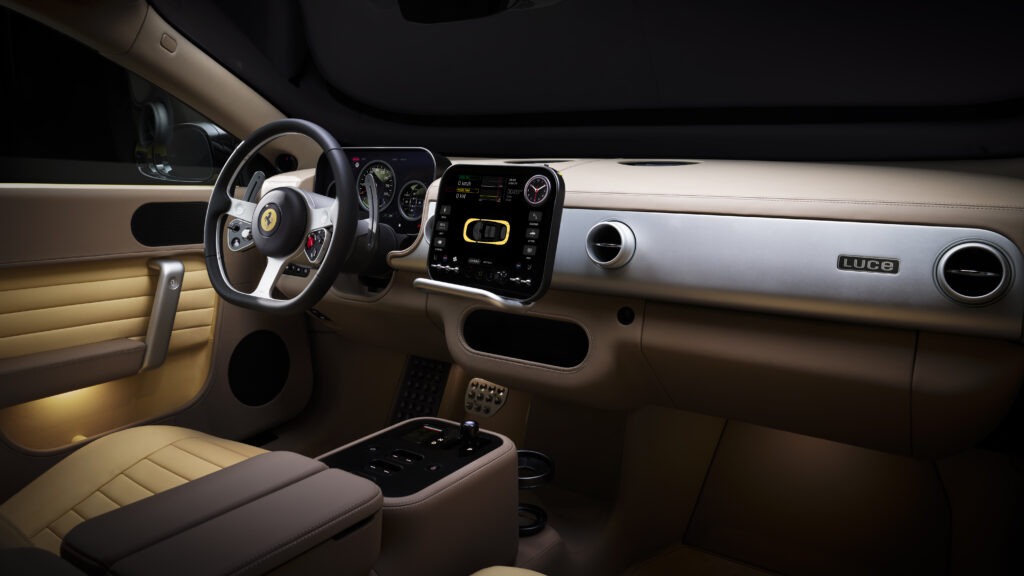
The Luce was designed in collaboration with LoveFrom — the design collective founded by Jony Ive and Marc Newson, known for the iPhone and Apple Watch. The collaboration began in 2021, and the result is an interior that deliberately breaks with the trend towards large touchscreens as a universal control surface.
Ive stated his position plainly in Car and Driver: “It would never have occurred to me to use touch-screen technology in a car. In a phone, it solved a specific problem. In a car, it is simply the wrong technology.”
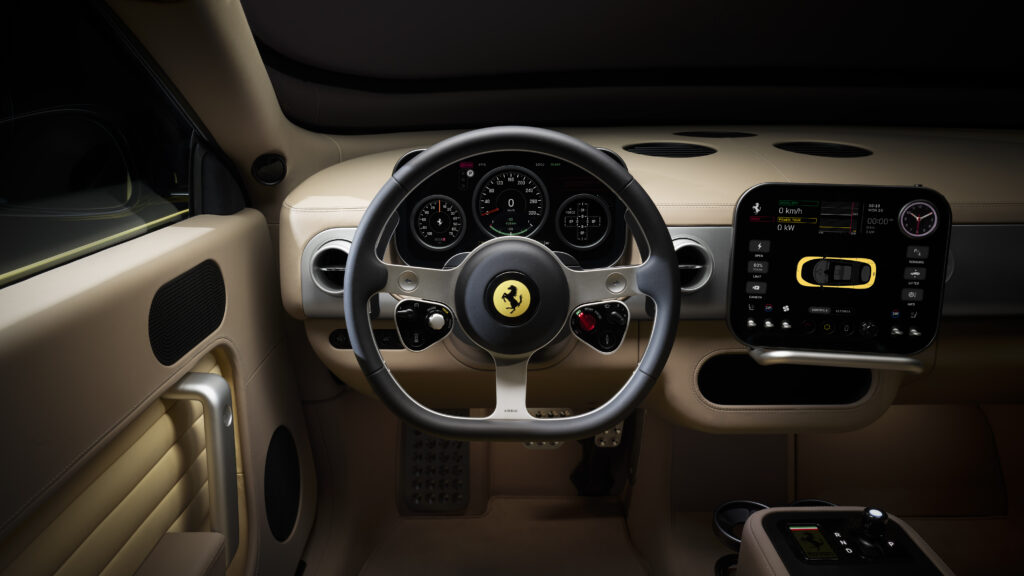
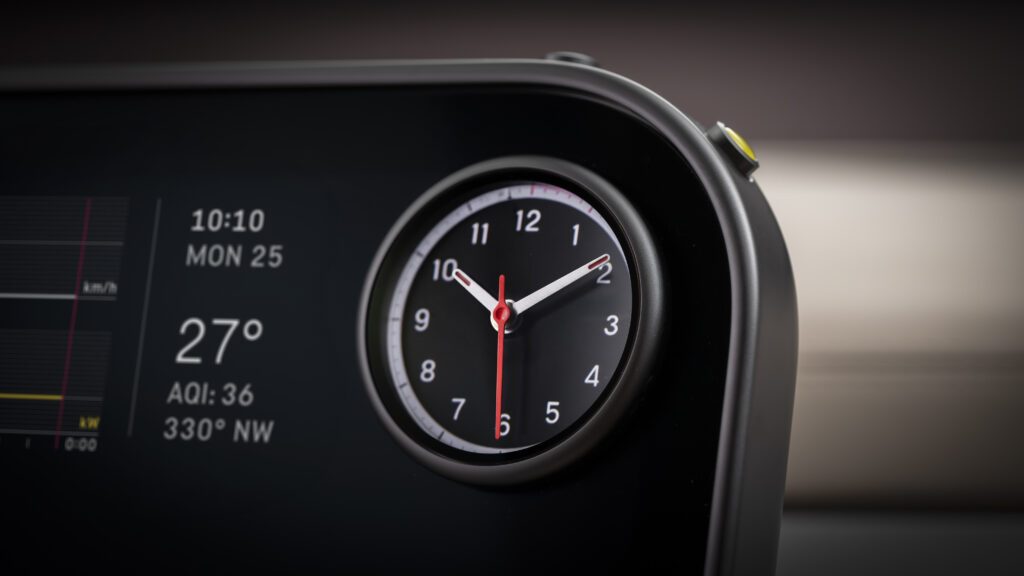
Physical controls are the foundation; digital content is the support layer. The steering wheel is machined from 100% recycled aluminium — CNC-cut from solid billet, comprising 19 separate components — with mechanical buttons and paddles. The instrument cluster is a layered OLED with a physical needle suspended between the display layers: a pseudo-rev counter that acknowledges Ferrari’s analogue heritage. The central screen is mounted on a ball joint, allowing it to swivel towards driver or passenger, with physical rocker switches that protrude through the screen surface.
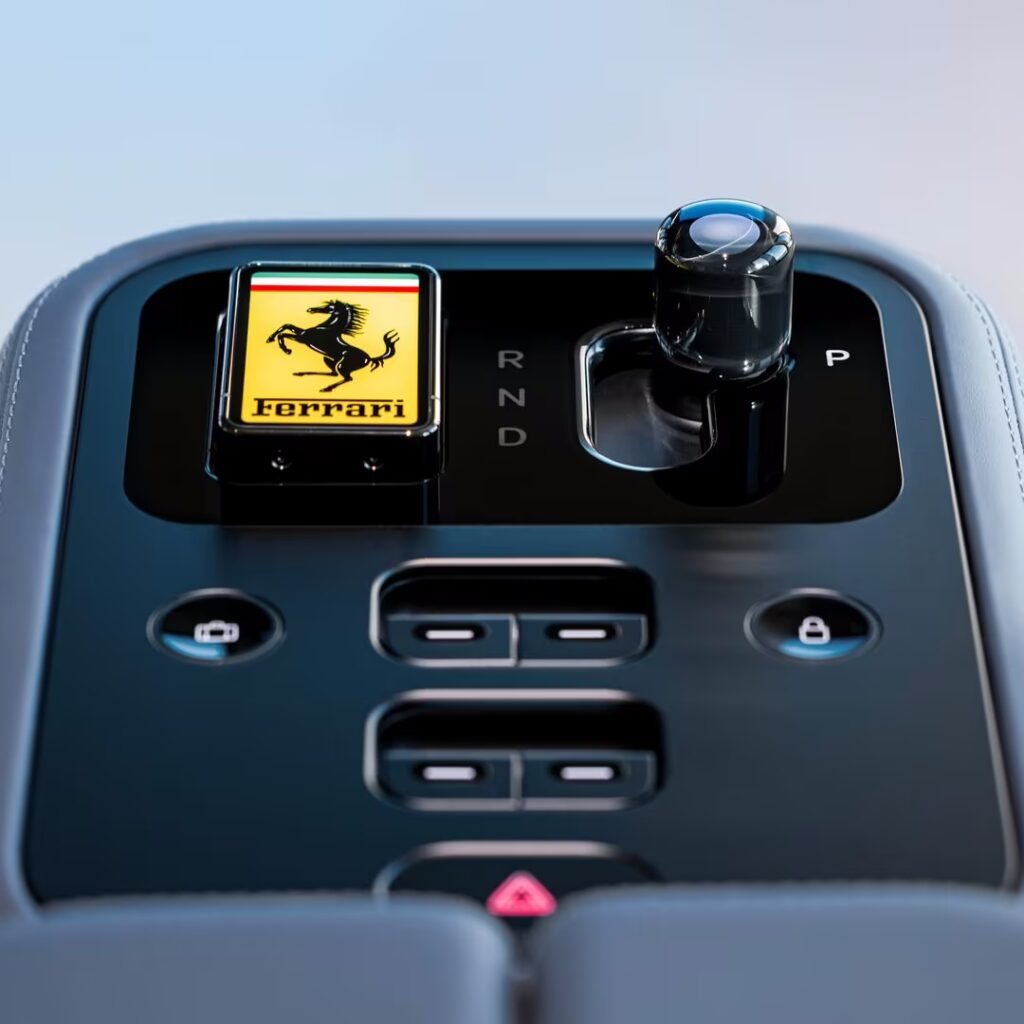
The key is made from hardened Corning glass with an E Ink display — a first for the automotive industry. Placed in its magnetised receiver in the centre console, it changes colour and “transfers” life to the gear selector. It is an almost ritual experience — a deliberate replacement for what one once felt turning the key on a V12.
The Design — Loved and Loathed
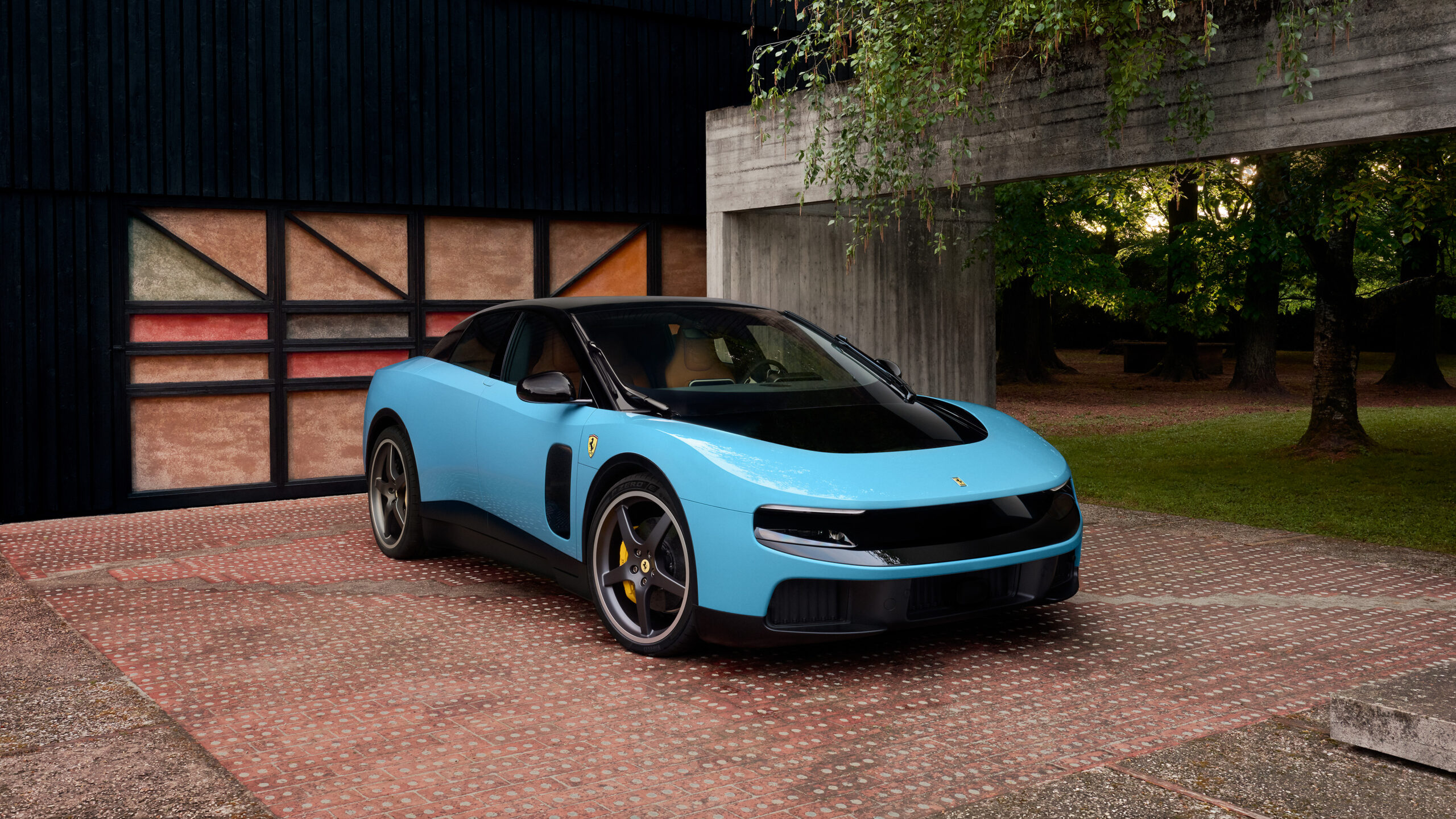
Ferrari’s own design department did not work alone on the Luce. The collaboration with LoveFrom leaves a clear imprint on the exterior as well. Clean, architectural surfaces, a glasshouse that reads more as a sculptural object than a conventional car body, and a silhouette in which everything is subordinated to aerodynamic purpose. This is not Pininfarina. It is something else.
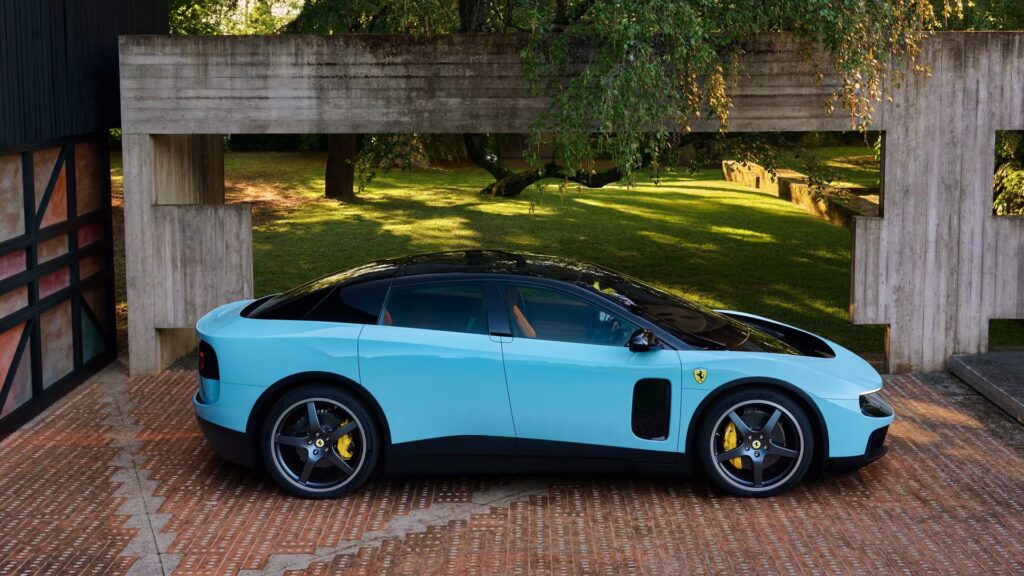
The reactions have been correspondingly polarised — ranging from “straight to the bin” to “masterpiece.” Rarely has a Ferrari reveal split the comment sections so decisively. Critics argue the car is too smooth, too technology-forward, too far removed from the muscular, mechanical language the marque was built on. Several have drawn parallels with the criticism Jaguar faced when it overhauled its design direction. Some have also questioned the LoveFrom collaboration itself: why bring in Jony Ive when Ferrari has its own designers?
Among the specialist and design press, however, the tone has been predominantly curious and positive, based on coverage from Electrek and Robb Report. A consistent observation is that the car reads as more elegant and composed in person than in photographs. The relationship between the glasshouse, the wheel arches and the low, wide stance makes more sense when seen in the room. The same design philosophy that governs the interior — architectural volumes, glass and aluminium, restrained but precise — carries through to the exterior. It is deliberate and coherent, even if it is not for everyone.
Ferrari reports strong customer response and full rooms around the car at the Rome premiere. Pre-orders were well underway before the public had even seen the exterior.
The Bigger Picture
Ferrari has said for years that it would not build EVs “for EV’s sake.” Vigna has been consistent: electric propulsion is a tool, not an objective.
What is perhaps most telling is this: at Capital Markets Day in October 2025, Ferrari confirmed its 2030 plan. The portfolio will comprise 40 per cent pure combustion, 40 per cent hybrid — and 20 per cent electric. And yet the company has launched an electric car that can stand against anything technically. This is not a defensive response to regulatory pressure. It is a choice. Ferrari is launching the Luce because it believes it has something genuinely new to say in this segment — not because it has to.
With a starting price of around €550,000 before options, very few people will ever drive one. But the Luce is not primarily about sales volume. It is a technical manifesto — and proof that the electric race now includes Maranello.